Most merchants assume there's a trade-off: you either get a cheap processor with a chatbot and a support queue, or you pay a premium for someone who actually picks up the phone. Cost+ is built to reject that trade-off. Our goal is to be one of the most affordable payment providers in the EU and UK while keeping support genuinely personal — not automated away, just automated where it makes sense.
That distinction matters more than it sounds. It shapes how we price, how we staff, and where we let software do the work instead of people.
1. Affordability comes from pricing structure, not from cutting service
The easiest way for a payment provider to look cheap is to advertise a low headline rate and make up the difference in places merchants don't check: blended margins, unclear refund handling, or a support team that's really just a ticket queue with a long SLA.
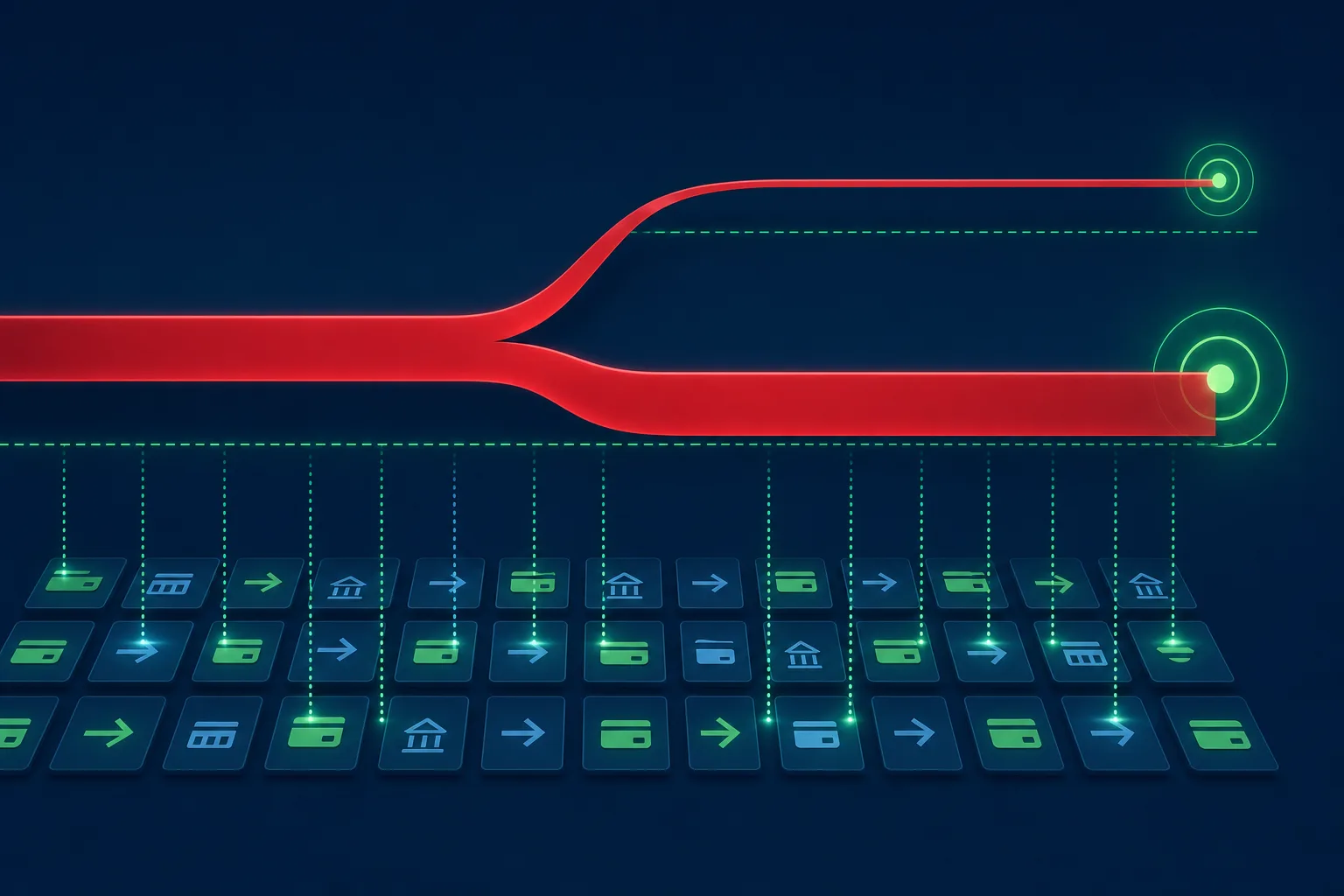
Cost+ takes a different approach. Every transaction runs on IC++ (Interchange Plus Plus) pricing, which means you see three components separately on every transaction:
- Interchange — the fee paid to the cardholder's issuing bank, set by the card networks.
- Scheme fee — paid to Visa, Mastercard, Amex, or whichever network processed the card.
- Cost+ markup — our disclosed fee on top, currently 0.50% plus €0.15 per authorization for standard low-risk merchants.
Because interchange and scheme fees are pass-through costs set by the networks — not us — there's no hidden padding to strip out later. The savings versus a blended-rate processor (where all three are bundled into one quoted rate, like "1.85% + €0.25") come from removing that opacity, not from removing service. Our published claim is up to 40% savings versus blended pricing; actual savings depend on your card mix, volume, and risk profile.
Affordability that comes from structural transparency doesn't require understaffing support.
When your margin is disclosed instead of buried, you don't need to claw back cost elsewhere to stay profitable.

2. Why we stay lean instead of staying big
Cost+ runs with a small, senior team by design. There's no layered management structure between a merchant's question and the person who can actually answer it. Automation and strategic partnerships replace a lot of the internal overhead that larger processors carry — not the human-facing parts of the business.
That leanness is the actual mechanism behind low pricing and personal support existing at the same time. Every euro that isn't spent on internal bureaucracy is either passed back to merchants through pricing, or spent keeping response times short when a merchant has a real problem: a declined batch, a chargeback dispute, a payout question.
This is also why Cost+ takes on industries that bigger processors avoid or overcharge — CBD, iGaming, forex, nicotine pouches, vape, and similar categories. Underwriting these merchants properly takes more attention per account, not less, which only works if the team isn't stretched across unrelated overhead.
3. Where AI actually fits — and where it doesn't
We use AI in exactly two places, and neither replaces a person who's available to help.
- Website chat outside business hours. If you land on the site late at night or on a weekend with a general question, an AI assistant can answer it. During business hours, or for anything account-specific, it hands off to the team.
- Dashboard statistics. Inside the merchant dashboard, AI is used to surface patterns in transaction data — trends, anomalies, summaries — so merchants can see what's happening without digging through raw exports manually.
That's the boundary. AI doesn't handle underwriting decisions, chargeback disputes, onboarding calls, or pricing negotiations. Those go to Christian, Esben, Steffen, or Theis — the same small team, not a rotating queue of contractors reading from a script.

4. What "high quality" actually means for a payment provider
Low cost is easy to claim and hard to sustain if quality slips. For a payment provider, quality isn't a vague feeling — it's specific things:
- Itemised fees on every transaction, so nothing shows up unexplained at settlement.
- A named person who owns your account, not a ticket number that resets every time you reply.
- Support for industries that get rejected elsewhere, backed by underwriting that's actually done properly rather than declined by default.
- Infrastructure that works when it matters — Tier-1 processing in the EU/EEA and the UK, with the website advertising 99.99% uptime (a public claim, not a contractual SLA).
- Clear escalation paths when something goes wrong, rather than a support model that only exists to close tickets fast.
None of these require charging more. They require running the business without unnecessary layers between the merchant and the decision-maker.
5. The honest limits
We're not claiming to be the cheapest processor in absolute terms for every merchant in every category — actual savings depend on your specific card mix, volume, and risk profile, and high-risk pricing is set through underwriting rather than a fixed public rate. We're also not claiming a guaranteed approval rate or a contractual uptime SLA. What we are claiming is straightforward: transparent pricing structure plus a lean, senior team is a better foundation for both low cost and real support than either a bloated org chart or an over-automated one.
If you want to see what that looks like for your business specifically, the fastest way is to run your numbers through our fee calculator or talk directly to the team about your card mix and volume — not a sales script, an actual quote based on your situation.
Merchants who've been quoted a flat blended rate before know how little that number tells you. Ours is built to tell you everything. If that's the kind of pricing and support relationship you're looking for, get in touch with our team or start with the merchant dashboard registration.